
Category: English

  • Test Video #2 #2

    Test Video #2 #2

    Test Video Video

    Vertical

    Custom HTML

    Direct selection

    That’s what makes it one of the most tradeable markets, especially if you follow the news.
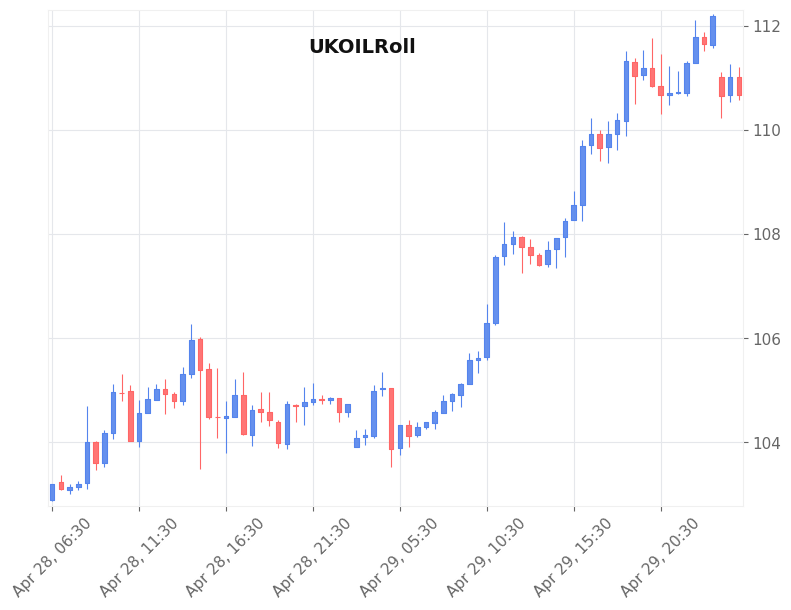
    What Moves Oil

    There are four key drivers. Learn these, and you’ll understand most price moves.

    • Supply: When OPEC cuts production, prices usually rise.
      If members produce more than expected, prices tend to fall.
    • Demand: Strong global growth increases demand and pushes oil higher.
      Fears of recession reduce demand and push prices lower.
    • Geopolitics: In March 2026, Iran threatened to close the Strait of Hormuz.
      Brent surged to $100 per barrel within days.
    • The Dollar: Oil is priced in US dollars.
      A weaker dollar usually means higher oil prices. A stronger dollar often pushes oil lower.

    The Hormuz Lesson: Don’t Chase the Headline

    When Brent hit $100, many traders rushed in and bought at the top.

    Soon after, prices pulled back as markets started expecting a resolution. Late buyers were stopped out.

    This is one of the most common beginner mistakes: buying after a big move instead of before it.

    The key lesson: the biggest move happens when the news breaks, not when you read about it.
    Wait for confirmation before entering a trade.

    How to Size a $100 Trade

    • Account: $100
    • Risk: $10 (maximum 10%)
    • Entry: Brent at $85.00
    • Stop Loss: $83.50 (below recent support)

    Position size: $10 ÷ $1.50 = 6.6 barrels

    With 1:100 leverage, your $100 controls $10,000 worth of oil.

    Leverage gives you access, but your stop loss is what protects you.

    TP and SL: The Simple Rule

    Set your Stop Loss (SL) below the nearest support level before entering the trade.

    Set your Take Profit (TP) at least twice the distance of your SL.

    If your SL is $1.50 away, your TP should be $3.00 away, targeting $88.00. This is called a 1:2 risk-to-reward ratio. One winning trade can cover two losing ones.

    As the trade moves in your favor, move your SL to your entry point. Now the worst-case outcome is breaking even.

    The Bottom Line

    Oil is driven by news you already follow.

    Leverage makes even a $100 account powerful,
    but only if you manage your risk and set your stops before entering.

    The next oil move is coming.

    The question is: will you be ready?

    Glossary
    
    Leverage: $100 can control $10,000 at 1:100. Amplifies both profits and losses.
    
    Stop Loss (SL): Your exit if the trade goes against you. Always set it before entering.
    
    Take Profit (TP): Your target exit. Aim for at least 2x your risk.
    
    Support Level: A price level where oil previously stopped falling. Place your SL below it.
    
    Brent Oil: The global benchmark for oil prices used in most international trades.

  • Test Video #2

    Test Video #2

    Test Video Video

    Custom HTML

    Direct selection

    That’s what makes it one of the most tradeable markets, especially if you follow the news.

    What Moves Oil

    There are four key drivers. Learn these, and you’ll understand most price moves.

    • Supply: When OPEC cuts production, prices usually rise.
      If members produce more than expected, prices tend to fall.
    • Demand: Strong global growth increases demand and pushes oil higher.
      Fears of recession reduce demand and push prices lower.
    • Geopolitics: In March 2026, Iran threatened to close the Strait of Hormuz.
      Brent surged to $100 per barrel within days.
    • The Dollar: Oil is priced in US dollars.
      A weaker dollar usually means higher oil prices. A stronger dollar often pushes oil lower.

    The Hormuz Lesson: Don’t Chase the Headline

    When Brent hit $100, many traders rushed in and bought at the top.

    Soon after, prices pulled back as markets started expecting a resolution. Late buyers were stopped out.

    This is one of the most common beginner mistakes: buying after a big move instead of before it.

    The key lesson: the biggest move happens when the news breaks, not when you read about it.
    Wait for confirmation before entering a trade.

    How to Size a $100 Trade

    • Account: $100
    • Risk: $10 (maximum 10%)
    • Entry: Brent at $85.00
    • Stop Loss: $83.50 (below recent support)

    Position size: $10 ÷ $1.50 = 6.6 barrels

    With 1:100 leverage, your $100 controls $10,000 worth of oil.

    Leverage gives you access, but your stop loss is what protects you.

    TP and SL: The Simple Rule

    Set your Stop Loss (SL) below the nearest support level before entering the trade.

    Set your Take Profit (TP) at least twice the distance of your SL.

    If your SL is $1.50 away, your TP should be $3.00 away, targeting $88.00. This is called a 1:2 risk-to-reward ratio. One winning trade can cover two losing ones.

    As the trade moves in your favor, move your SL to your entry point. Now the worst-case outcome is breaking even.

    The Bottom Line

    Oil is driven by news you already follow.

    Leverage makes even a $100 account powerful,
    but only if you manage your risk and set your stops before entering.

    The next oil move is coming.

    The question is: will you be ready?

    Glossary
    
    Leverage: $100 can control $10,000 at 1:100. Amplifies both profits and losses.
    
    Stop Loss (SL): Your exit if the trade goes against you. Always set it before entering.
    
    Take Profit (TP): Your target exit. Aim for at least 2x your risk.
    
    Support Level: A price level where oil previously stopped falling. Place your SL below it.
    
    Brent Oil: The global benchmark for oil prices used in most international trades.

  • Test Video

    Test Video

    Test Video Video

    Custom HTML

    Direct selection

    That’s what makes it one of the most tradeable markets, especially if you follow the news.

    What Moves Oil

    There are four key drivers. Learn these, and you’ll understand most price moves.

    • Supply: When OPEC cuts production, prices usually rise.
      If members produce more than expected, prices tend to fall.
    • Demand: Strong global growth increases demand and pushes oil higher.
      Fears of recession reduce demand and push prices lower.
    • Geopolitics: In March 2026, Iran threatened to close the Strait of Hormuz.
      Brent surged to $100 per barrel within days.
    • The Dollar: Oil is priced in US dollars.
      A weaker dollar usually means higher oil prices. A stronger dollar often pushes oil lower.

    The Hormuz Lesson: Don’t Chase the Headline

    When Brent hit $100, many traders rushed in and bought at the top.

    Soon after, prices pulled back as markets started expecting a resolution. Late buyers were stopped out.

    This is one of the most common beginner mistakes: buying after a big move instead of before it.

    The key lesson: the biggest move happens when the news breaks, not when you read about it.
    Wait for confirmation before entering a trade.

    How to Size a $100 Trade

    • Account: $100
    • Risk: $10 (maximum 10%)
    • Entry: Brent at $85.00
    • Stop Loss: $83.50 (below recent support)

    Position size: $10 ÷ $1.50 = 6.6 barrels

    With 1:100 leverage, your $100 controls $10,000 worth of oil.

    Leverage gives you access, but your stop loss is what protects you.

    TP and SL: The Simple Rule

    Set your Stop Loss (SL) below the nearest support level before entering the trade.

    Set your Take Profit (TP) at least twice the distance of your SL.

    If your SL is $1.50 away, your TP should be $3.00 away, targeting $88.00. This is called a 1:2 risk-to-reward ratio. One winning trade can cover two losing ones.

    As the trade moves in your favor, move your SL to your entry point. Now the worst-case outcome is breaking even.

    The Bottom Line

    Oil is driven by news you already follow.

    Leverage makes even a $100 account powerful,
    but only if you manage your risk and set your stops before entering.

    The next oil move is coming.

    The question is: will you be ready?

    Glossary
    
    Leverage: $100 can control $10,000 at 1:100. Amplifies both profits and losses.
    
    Stop Loss (SL): Your exit if the trade goes against you. Always set it before entering.
    
    Take Profit (TP): Your target exit. Aim for at least 2x your risk.
    
    Support Level: A price level where oil previously stopped falling. Place your SL below it.
    
    Brent Oil: The global benchmark for oil prices used in most international trades.
  • Trade the Next Move With More on the Table

    Trade the Next Move With More on the Table

    A 50% Credit Bonus for traders already in the game.

    You know the feeling. A clean setup forms on Gold, the London session is opening up, and your margin tells you to pass. Not because the trade is wrong. Because the buffer isn’t there to ride it out.

    That’s what the VCG Markets 50% Credit Bonus is built for. Activate the offer, top up your account, and we add half your deposit as trading credit, automatically. Same strategy, same discipline, more room to execute.

    How to Claim It

    Log in to your VCG Markets account, open the Rewards section, and click the 50% Credit Bonus banner to activate the offer. Then make your deposit. The credit lands automatically the moment funds clear.

    The order matters: banner first, deposit second. Deposits made before activating the banner won’t qualify, so claim it before you fund.

    What the Top-Up Buys You

    • Deposit $250, trade with $375.
    • Deposit $1,000, trade with $1,500.
    • Deposit $2,000, trade with $3,000.

    Bonus capped at $1,000 per qualifying deposit. The cap is shared across VCG Markets credit bonus promotions — if you’ve already received credit from a previous bonus, any remaining cap room carries over to this one.

    A real margin boost. The credit counts toward your equity, which lifts your margin level from the moment it lands. That means more capacity to size positions properly, hold through drawdown, or open a second setup without compromising the first. Same account, stronger footing.

    More positions, less juggling. Holding a Gold long and a EUR/USD short stops feeling like a stretch when your margin level has space. You manage exposure on your terms, not on your account’s.

    Survive the noise. Wicks that cut into a tight account lose their bite. Trades stay open until your thesis plays out, or until your stop says otherwise. Not because the balance tapped out first.

    The Guardrails

    If your own funds drop below 35% of total equity, the bonus is removed automatically, with no extra pressure on the account. Withdrawals reduce the bonus proportionally, so your own capital is always fully yours to move. Once the bonus exits, standard margin and stop-out rules apply, so it’s worth watching positions near the threshold.

    Profits from trades opened with the bonus active are credited to your account in the normal way. The credit itself isn’t withdrawable, but anything you earn from it is.

    Structured to work with you, not against you.

    Ready When You Are

    Two steps, in this order:

    1. Open Rewards and click the 50% Credit Bonus banner.
    2. Make your deposit.

    That’s it. The credit is on your account before your next trade.

    See full Terms and Conditions here

  • From AI Chips to Happy Meals: 5 Giants Report This Week

    From AI Chips to Happy Meals: 5 Giants Report This Week

    Big Tech had its moment. This week, five heavyweights step up across tech, pharma, entertainment, rides, and fast food.

    Quick Refresher
    
    Every quarter, public companies reveal how much money they made (revenue), how much profit they kept (earnings per share, or EPS), and what they expect next. Surprises – good or bad – can move stock prices fast.

    Tuesday, May 5: The Chipmaker and the Pharma Giant

    Pfizer
    Kicks off the day with analysts expecting $0.72 EPS on $13.8 billion revenue (before market open, call at 10:00 AM ET). The numbers don’t look flashy – EPS is actually down ~22% year-over-year – but context matters. Pfizer is navigating life after the COVID revenue boom, and the real story is its pipeline beyond vaccines. Full-year guidance of $59.5-$62.5 billion in revenue and $2.80-$3.00 EPS remains intact. Watch whether management reaffirms or adjusts.

    AMD
    Is the headline act after market close, call at 5:00 PM ET. Wall Street expects $1.28 EPS on $9.88 billion revenue – both up roughly 33% year-over-year. The data center segment alone is forecast at $5.56 billion, up over 50%, as AMD’s AI chips challenge Nvidia’s dominance. The key question: can gross margins hold at the guided ~55%, or is aggressive pricing eating into profits? Options markets are pricing an ~8% move in either direction – traders are bracing for fireworks.

    Wednesday, May 6: Entertainment Meets the Gig Economy

    Disney
    Reports its fiscal Q2 with expectations of $1.49 EPS on roughly $25 billion revenue before market open, webcast at 8:30 AM ET. The story has shifted from subscriber growth to streaming profitability – investors want Disney+ and Hulu generating real operating profit, not just growing audiences. Meanwhile, the Experiences segment faces headwinds from international park traffic and pre-launch costs for new attractions including the Disney Adventure cruise ship and World of Frozen at Disneyland Paris.

    Uber
    Expects $0.71 EPS on $13.27 billion revenue, roughly 15% growth (before market open). The profitability story keeps building – adjusted EBITDA guidance of $2.37-$2.47 billion would mark another record quarter. Both mobility and delivery segments are expected to post double-digit growth in gross bookings. The wildcard: updates on the Waymo robotaxi partnership, now live in Austin and Atlanta.

    Thursday, May 7: The Golden Arches

    McDonald’s
    Closes out the week (before market open). Analysts expect $2.75 EPS on $6.49 billion revenue – up 3% and ~9% respectively. Franchised revenue alone is projected at $4 billion, up over 9%. RBC expects results close to consensus with the company reaffirming its 2026 outlook. But Jefferies has trimmed sales forecasts on signs of softer consumer demand in March – making this a real-time read on whether everyday diners are pulling back.

    Why it all matters: After last week’s Magnificent Seven blitz, this week dials into the real economy. Are patients still filling prescriptions? Are families still visiting theme parks? Are riders still hailing Ubers? And is AI chip demand still white-hot? Five very different companies, one shared question: how is the consumer holding up? The answers start Tuesday morning.

  • Earnings Season Heats Up: 11 Giants Report This Week

    Earnings Season Heats Up: 11 Giants Report This Week

    Last week was the warm-up. This is the main event – four Magnificent Seven names on a single day, and they’re not alone.

    What's Happening This Week?
    
    Eleven major companies release their quarterly "report cards" – showing how much they earned, how fast they're growing, and what's next. Big surprises can move entire markets.

    Tuesday, April 28: Five Names, One Packed Day

    Coca-Cola
    Reports before market open, call at 8:30 AM ET under new CEO Henrique Braun for the first time. Analysts expect $0.81 EPS on $12.3 billion revenue. Can the company deliver 4-5% organic growth while navigating aluminum tariffs and currency headwinds?

    Spotify
    Has been on a profitability tear (before market open, Q&A at 8:00 AM ET). Consensus: ~$3.03 EPS on $5.3 billion revenue. Watch whether monthly active users push past the 759 million guidance and gross margins hold near 33%.

    Visa
    Expects $3.09 EPS on $10.7 billion revenue (after market close, webcast at 5:00 PM ET). The stock is down ~11% year-to-date – the real test is cross-border transaction growth amid regulatory pressure.

    Booking Holdings
    Rides travel demand strength (after market close, call at 4:30 PM ET). Consensus: $48.69 EPS on $6.14 billion revenue. The company guided 14-16% revenue growth and hasn’t missed estimates in two years.

    Starbucks
    Is the turnaround story (after market close). Expect $0.42 EPS on $9.2 billion revenue – potentially the first EPS growth since 2023. U.S. same-store transaction growth is the number to watch.

    Wednesday, April 29: The Mega-Tech Showdown

    Four members of the “Magnificent Seven” – Wall Street’s nickname for the seven largest U.S. tech giants – report after the bell, together worth over $10 trillion.

    Alphabet
    Expects $2.63 EPS on $107 billion revenue. Google Cloud growth above 50% is the AI proof point. Ad revenue projected at $76.9 billion, up 15%.

    Microsoft
    Forecasts $4.06 EPS on $81.4 billion revenue. Azure growth guided at 37–38% is the headline – alongside $35 billion quarterly capex, up 65% year-over-year.

    Amazon
    Expects $1.63 EPS on $177 billion revenue. AWS drives profits, but the jaw-dropper: $200 billion in planned AI spending for 2026.

    Meta
    Projects $6.73 EPS on $55.4 billion revenue – ~30% growth not seen since 2018. Hasn’t missed revenue in 14 straight quarters. AI-powered ads fuel the streak.

    Thursday, April 30: The Grand Finale

    Mastercard
    Expects $4.40 EPS on $8.29 billion revenue, both up ~15-18% (before market open). Cross-border volume growth reveals global spending health.

    Apple
    Wraps the week with the biggest spotlight (after market close, call at 5:00 PM ET). Expect $1.95 EPS on $109.7 billion revenue – up ~18% and ~15% respectively. After a record Q1 of $143.8 billion, iPhone and Services momentum are the drivers. This may also be one of Tim Cook’s final earnings calls before handing CEO duties to John Ternus.

    Why it all matters: Earnings season is in full swing – and this week is its beating heart. From streaming profits to AI mega-spending, from lattes to luxury travel, these 11 reports reveal whether the world’s biggest companies can keep growing through tariff uncertainty and shifting habits.

  • Earnings Season Alert: 8 Corporate Giants Report This Week

    Earnings Season Alert: 8 Corporate Giants Report This Week

    Every quarter, public companies open their books. This week? Eight heavyweights step up – from robotaxis to beauty empires – and markets will be listening closely.

    What Are Earnings Reports?
    
    Think of them as a company's report card. Every three months, public companies reveal how much money they made (revenue), how much profit they kept (earnings per share, or EPS), and what they expect next. When results surprise Wall Street – up or down – stock prices can move fast.

    Wednesday, April 22: The Heavy Hitters

    • Tesla (after market close, earnings call at 5:30 PM ET) is the one everyone’s watching. Analysts expect $0.37 profit per share on $22.7 billion in sales – but Tesla delivered only 358,023 cars, missing the ~369,000 Wall Street expected. The bigger story? Tesla is pouring over $20 billion into AI infrastructure and robotaxi technology. With a $1.5 trillion valuation, investors are betting on the future, not just the cars. Expect the sharpest questions around Terafab – a massive AI computing facility whose costs sit on top of that figure – and whether seven promised new robotaxi cities are still on track.
    • IBM (after market close, earnings call at 5:00 PM ET) has quietly been on a hot streak, beating profit expectations four quarters running. Analysts expect $1.81 EPS on $15.6 billion revenue, powered by demand for AI tools, hybrid cloud, and cybersecurity.
    • Boeing (before market open, earnings call at 10:30 AM ET) lands with turbulence baked in. Expect a loss of $0.63 per share on $22.1 billion revenue. A quality problem on the 737 line affected about 25 planes, and CFO Jay Malave already warned deliveries may undershoot guidance. Recovery story? Yes – but patience is the price of admission.
    • L’Oréal, the world’s largest beauty company, reports its quarterly sales during European trading hours. Last half-year saw 5% growth overall, with professional products and skincare surging 9%. The big question: can that momentum hold while China’s economy wobbles?

    Thursday, April 23: The Comeback Stories

    • Intel (after market close, earnings call at 5:00 PM ET) is trying to prove its turnaround is real. Profit expectations are tiny – just $0.01 per share – but the signal matters more than the number. Server chip demand is sold out through 2026, and Intel’s next-gen manufacturing process (called 18A) could be a game-changer if quality improves.
    • American Express (before market open, earnings call at 8:30 AM ET) arrives with premium-customer tailwinds. Analysts forecast $3.97 EPS on $18.6 billion revenue. Full-year guidance calls for 9–10% revenue growth – the question is whether wealthy cardholders keep spending if the economy softens.
    • SAP, Europe’s biggest software company, reports after European market close at 11:00 PM CEST with its stock down ~30% this year. Analysts expect €1.64 EPS and €9.56 billion revenue. The number to watch: the cloud backlog – €21 billion in future contracts – plus early results from its AI assistant Joule.

    Friday, April 24: The Reliable One

    • Procter & Gamble (before market open) – the company behind Tide, Pampers, and Gillette – wraps up the week. Expect $1.56 EPS and ~3.2% sales growth. P&G has beaten expectations four straight quarters. In a week of tech and industrial drama, this report answers a simple question: are everyday consumers still spending?

    Why it all matters: Earnings season is just getting started – and this week sets the tone. From AI mega-bets to everyday consumer spending, these eight reports offer a real-time health check on the forces shaping markets right now. And don’t put your guard down: next week brings another wave of heavyweights. Whether you’re a seasoned investor or just getting curious, the season is only warming up.

  • Oil: The Market That Moves With the World

    Oil: The Market That Moves With the World

    Every time there’s a headline about the Middle East or an OPEC meeting, oil moves. No other market reacts to global events as quickly or as clearly.

    That’s what makes it one of the most tradeable markets, especially if you follow the news.

    What Moves Oil

    There are four key drivers. Learn these, and you’ll understand most price moves.

    • Supply: When OPEC cuts production, prices usually rise.
      If members produce more than expected, prices tend to fall.
    • Demand: Strong global growth increases demand and pushes oil higher.
      Fears of recession reduce demand and push prices lower.
    • Geopolitics: In March 2026, Iran threatened to close the Strait of Hormuz.
      Brent surged to $100 per barrel within days.
    • The Dollar: Oil is priced in US dollars.
      A weaker dollar usually means higher oil prices. A stronger dollar often pushes oil lower.

    The Hormuz Lesson: Don’t Chase the Headline

    When Brent hit $100, many traders rushed in and bought at the top.

    Soon after, prices pulled back as markets started expecting a resolution. Late buyers were stopped out.

    This is one of the most common beginner mistakes: buying after a big move instead of before it.

    The key lesson: the biggest move happens when the news breaks, not when you read about it.
    Wait for confirmation before entering a trade.

    How to Size a $100 Trade

    • Account: $100
    • Risk: $10 (maximum 10%)
    • Entry: Brent at $85.00
    • Stop Loss: $83.50 (below recent support)

    Position size: $10 ÷ $1.50 = 6.6 barrels

    With 1:100 leverage, your $100 controls $10,000 worth of oil.

    Leverage gives you access, but your stop loss is what protects you.

    TP and SL: The Simple Rule

    Set your Stop Loss (SL) below the nearest support level before entering the trade.

    Set your Take Profit (TP) at least twice the distance of your SL.

    If your SL is $1.50 away, your TP should be $3.00 away, targeting $88.00. This is called a 1:2 risk-to-reward ratio. One winning trade can cover two losing ones.

    As the trade moves in your favor, move your SL to your entry point. Now the worst-case outcome is breaking even.

    The Bottom Line

    Oil is driven by news you already follow.

    Leverage makes even a $100 account powerful,
    but only if you manage your risk and set your stops before entering.

    The next oil move is coming.

    The question is: will you be ready?

    Glossary
    
    Leverage: $100 can control $10,000 at 1:100. Amplifies both profits and losses.
    
    Stop Loss (SL): Your exit if the trade goes against you. Always set it before entering.
    
    Take Profit (TP): Your target exit. Aim for at least 2x your risk.
    
    Support Level: A price level where oil previously stopped falling. Place your SL below it.
    
    Brent Oil: The global benchmark for oil prices used in most international trades.

  • The Double-Up Effect: 2X Your Market Vision

    The Double-Up Effect: 2X Your Market Vision

    In trading, “more” usually means more risk. But with the VCG Markets 100% Credit Bonus, “more” simply means more opportunity. We are recalibrating your account’s potential by matching your deposit dollar-for-dollar.

    Whether you’re eyeing a breakout on Gold or a shift in the FX markets, you’re now stepping in with twice the capital you started with.

    The Instant Power-Shift

    The 100% Credit Bonus is designed to work alongside your deposit, giving you more flexibility the moment you are ready to trade.

    The logic is simple: Think of the bonus as an extra “safety buffer.” By doubling your balance, you reduce the pressure on your account for every trade you open. This gives your positions more room to survive small price movements, helping you stay in the market longer without the stress of a low balance.

    You DepositVCG Markets BonusYour Total Trading Power
    $100$100 Credit$200
    $500$500 Credit$1,000
    $1,000$1,000 Credit$2,000

    Why This Changes the Game

    A Healthier Margin Level
    A larger balance means a stronger  Margin Level. This is designed to give your positions more “breathing room,” helping you navigate market noise without the risk of your trades being closed too early.

    Diversification Potential
    Increased capital makes it easier to manage multiple positions. You can allocate funds to Gold, Oil, or Crypto simultaneously, allowing you to explore more opportunities at once.

    Strategic Position Sizing
    With more capital at your disposal, you can choose trade sizes that fit your strategy. This allows you to manage your risk more professionally, just like experienced traders do.

    Limited Time Availability

    Boost your balance today! This 100% Credit Bonus is a limited-time opportunity. It is designed to provide a strong start for our VCG members – make sure to take advantage of this boost before the window closes.

    The Smart Side of the Double-Up

    The Credit Bonus is designed to work alongside you, not against you. If your own funds drop below 35% of your total equity, the bonus is automatically removed, stepping aside before it could add pressure to your account. And if you withdraw funds, the bonus simply adjusts proportionally, so you stay in full control of your money at all times. Once removed, your account continues under the platform’s standard margin and stop-out rules, so it’s always a good idea to monitor your positions, especially when trading near the protection thresholds. More room to trade, and smart guardrails to trade with confidence.

    See full Terms and Conditions here

  • The Double-Up Effect: 2X Your Market Vision

    The Double-Up Effect: 2X Your Market Vision

    In trading, “more” usually means more risk. But with the VCG Markets 100% Credit Bonus, “more” simply means more opportunity. We are recalibrating your account’s potential by matching your deposit dollar-for-dollar.

    Whether you’re eyeing a breakout on Gold or a shift in the FX markets, you’re now stepping in with twice the capital you started with.

    The Instant Power-Shift

    The 100% Credit Bonus is designed to work alongside your deposit, giving you more flexibility the moment you are ready to trade.

    The logic is simple: Think of the bonus as an extra “safety buffer.” By doubling your balance, you reduce the pressure on your account for every trade you open. This gives your positions more room to survive small price movements, helping you stay in the market longer without the stress of a low balance.

    You DepositVCG Markets BonusYour Total Trading Power
    $100$100 Credit$200
    $500$500 Credit$1,000
    $1,000$1,000 Credit$2,000

    Why This Changes the Game

    A Healthier Margin Level
    A larger balance means a stronger  Margin Level. This is designed to give your positions more “breathing room,” helping you navigate market noise without the risk of your trades being closed too early.

    Diversification Potential
    Increased capital makes it easier to manage multiple positions. You can allocate funds to Gold, Oil, or Crypto simultaneously, allowing you to explore more opportunities at once.

    Strategic Position Sizing
    With more capital at your disposal, you can choose trade sizes that fit your strategy. This allows you to manage your risk more professionally, just like experienced traders do.

    Limited Time Availability

    Boost your balance today! This 100% Credit Bonus is a limited-time opportunity. It is designed to provide a strong start for our VCG members – make sure to take advantage of this boost before the window closes.

    The Smart Side of the Double-Up

    The Credit Bonus is designed to work alongside you, not against you. If your own funds drop below 35% of your total equity, the bonus is automatically removed, stepping aside before it could add pressure to your account. And if you withdraw funds, the bonus simply adjusts proportionally, so you stay in full control of your money at all times. Once removed, your account continues under the platform’s standard margin and stop-out rules, so it’s always a good idea to monitor your positions, especially when trading near the protection thresholds. More room to trade, and smart guardrails to trade with confidence.

    See full Terms and Conditions here